Seismic engineering in Gatineau is not merely a regulatory checkbox—it is a fundamental discipline that protects lives, infrastructure, and economic continuity in a region shaped by significant geological forces. This category encompasses the full spectrum of earthquake-resistant design, from site-specific hazard assessments to advanced structural mitigation systems. For property owners, developers, and public agencies, understanding seismic requirements is critical because Gatineau sits within the Western Quebec Seismic Zone, a region with a history of moderate to strong intraplate earthquakes. The category includes specialized works such as base isolation seismic design, which decouples structures from ground motion, and seismic amplification analysis, which evaluates how local soil conditions can magnify shaking intensity. Ignoring these considerations can lead to catastrophic structural failure, disproportionate damage to essential facilities, and prolonged post-event recovery periods.
The geology beneath Gatineau directly amplifies seismic risk in ways that generic building codes cannot fully capture. Much of the urban area is underlain by thick deposits of marine clay—specifically the sensitive Champlain Sea clays—which can amplify ground motions and are prone to strength loss during cyclic loading. These soft soils overlie a complex bedrock topography of the Canadian Shield, creating sharp impedance contrasts that trap seismic energy. This makes seismic amplification analysis an indispensable step for any significant project, as it quantifies site-specific response rather than relying on default amplification factors. Additionally, the region's deep fault systems, including those related to the Ottawa-Bonnechere Graben, generate earthquakes with high-frequency content that particularly affects low- to mid-rise buildings. These local conditions demand a geotechnical and structural design approach that goes well beyond prescriptive code minima.
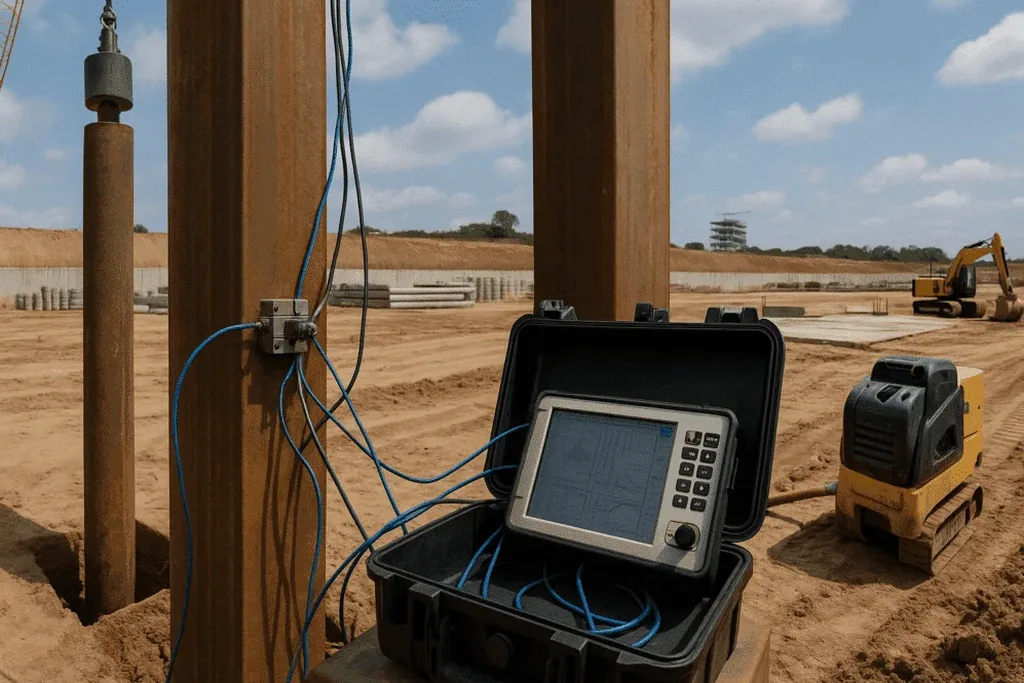
Canada’s seismic design framework is governed by the National Building Code of Canada, with its structural provisions anchored in CSA S16 for steel, CSA A23.3 for concrete, and the site classification procedures of the Canadian Foundation Engineering Manual. In Quebec, these are adopted with provincial amendments that reflect the unique seismotectonic environment. The code mandates site-specific ground motion parameters derived from the Geological Survey of Canada’s seismic hazard model, requiring designers to consider spectral accelerations for a 2% probability of exceedance in 50 years. For Gatineau, this translates to demanding design values that often control lateral force-resisting systems. Crucially, the code permits and encourages performance-based design and advanced mitigation technologies like base isolation seismic design for essential and high-importance structures, aligning with modern resilience-based objectives that prioritize functionality after a design-level event.
The types of projects that must rigorously address seismic design in Gatineau extend far beyond new high-rises. Existing building retrofits constitute a major segment, particularly for unreinforced masonry and non-ductile concrete frames that predate modern codes. Critical infrastructure—hospitals, emergency response centers, bridges, and water treatment plants—requires post-disaster performance verification, often triggering the need for nonlinear time-history analysis and advanced protective systems. Even low-rise commercial and industrial buildings with irregular configurations or those founded on soft clay deposits demand careful seismic evaluation to prevent torsional failures or excessive foundation movements. Transportation corridors and utility networks crossing the sensitive clay zones must incorporate fault-crossing and liquefaction mitigation strategies. In every case, the integration of geotechnical seismic site response with structural dynamic analysis forms the backbone of a defensible design.
Questions and answers
What makes Gatineau's seismic risk different from other Canadian cities?
Gatineau lies within the Western Quebec Seismic Zone, an intraplate region with frequent moderate earthquakes. The risk is compounded by thick Champlain Sea clay deposits that amplify ground shaking and may lose strength during cyclic loading. This combination of a moderately active source zone and highly susceptible local soils creates a seismic demand often higher than cities on firm ground in similar hazard zones.
When is a site-specific seismic amplification analysis required instead of using code default values?
A site-specific analysis is required under the National Building Code of Canada when a site is underlain by soft soils, especially those with a shear wave velocity below 180 m/s, or when a structure is classified as high importance. In Gatineau, the widespread marine clays frequently trigger this requirement, as default amplification factors can underestimate the true site response and lead to unconservative designs.
How does base isolation protect a building during an earthquake?
Base isolation decouples the superstructure from horizontal ground motions by introducing flexible bearing elements, typically elastomeric or sliding isolators, at the foundation level. This extends the structure's fundamental period, shifting it away from the dominant energy content of the earthquake and reducing floor accelerations and inter-story drifts significantly, thereby protecting both structural integrity and sensitive contents.
What types of existing buildings in Gatineau are most vulnerable seismically?
Unreinforced masonry buildings, non-ductile concrete frame structures built before the 1970s, and older tilt-up warehouses are particularly vulnerable. These typologies lack adequate reinforcement for lateral load paths and are susceptible to brittle failure modes. In Gatineau's soft soil conditions, such buildings can track record severe damage or collapse even in a moderate event, making seismic evaluation and retrofit a priority for public safety.