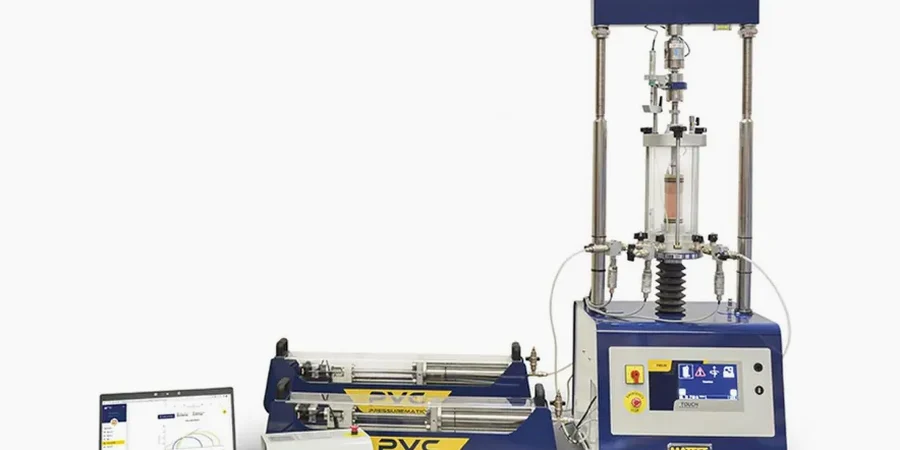
Geotechnical laboratory testing forms the backbone of safe and economical construction in Gatineau, encompassing a suite of physical and mechanical analyses that transform field samples into reliable design parameters. This category covers essential procedures from basic classification tests like Atterberg limits to advanced strength evaluations such as triaxial test programs. In a city undergoing rapid residential expansion and major infrastructure renewal, understanding subsurface behavior through controlled laboratory conditions is critical for mitigating risks like differential settlement, slope instability, and bearing capacity failure. The data generated informs everything from foundation depth selection to retaining wall design and pavement performance predictions.
Gatineau's geological context is dominated by the Champlain Sea basin, leaving extensive deposits of sensitive marine clays, notably the Leda clay, across much of the urbanized area. These soils exhibit high sensitivity and can lose significant strength when remolded, making accurate laboratory characterization essential. Glacial till, fluvial sands, and occasional rock formations add further complexity to the local stratigraphy. The presence of these sensitive clays means that standard field investigation alone is insufficient; laboratory testing is required to quantify properties like preconsolidation pressure, undrained shear strength, and compressibility, which directly influence the stability of excavations and the long-term performance of foundations in neighborhoods like Hull and Aylmer.
Laboratory testing in Gatineau must align with provincial and national standards, primarily the CSA A3000 series for concrete and the BNQ standards adopted by the Ministère des Transports du Québec (MTQ) for soils and aggregates. The Canadian Foundation Engineering Manual provides the overarching geotechnical framework, while ASTM International methods are also widely referenced. For road and municipal projects, the MTQ's Cahier des charges et devis généraux dictates specific testing protocols, including Proctor test (Standard or Modified) requirements for compaction control and laboratory CBR test procedures for subgrade evaluation. Adherence to these norms ensures regulatory compliance and defensible engineering recommendations.
Projects requiring comprehensive laboratory works range from low-rise residential subdivisions on sensitive clay deposits to major public works like the Rapibus transit corridor and commercial developments in the Plateau district. A soil mechanics study is fundamental for any project involving earthworks, deep excavations, or heavy structural loads. For sites with complex stress histories or where undisturbed sampling is challenging, specialized testing like residual soil characterization may be necessary. Whether designing a shallow footing for a single-family home or analyzing slope stability along the Gatineau River escarpment, laboratory-derived strength and consolidation parameters deliver the quantitative basis for geotechnical analysis and design.
Available services
Questions and answers
What is the purpose of a geotechnical laboratory testing program in Gatineau?
A laboratory program quantifies the physical and mechanical properties of local soils and rock, which are dominated by sensitive Champlain Sea clays. It provides essential parameters for foundation design, slope stability analysis, and earthworks specifications, moving beyond visual field descriptions to deliver defensible engineering data that accounts for Gatineau's unique geological risks like soil sensitivity and variable drainage conditions.
Which standards govern soil laboratory testing for construction projects in Quebec?
Testing in Gatineau follows the Ministère des Transports du Québec (MTQ) standards for soils and aggregates, complemented by CSA and ASTM International methods. The Canadian Foundation Engineering Manual provides the professional framework. Municipal and provincial projects typically reference the MTQ's Cahier des charges et devis généraux for specific test procedures and acceptance criteria.
How do I know which laboratory tests are needed for my project?
The required tests depend on the project type, site geology, and expected soil conditions. A geotechnical engineer selects tests based on the preliminary site investigation. For example, sensitive clay sites require consolidation and triaxial tests, while a road project needs Proctor and CBR tests. The scope is tailored to address specific design questions and regulatory requirements.
What is the difference between classification tests and performance tests?
Classification tests like Atterberg limits and grain size analysis identify soil type and predict general behavior, forming the basis of a soil profile. Performance tests, such as direct shear, triaxial compression, and consolidation, directly measure engineering properties like shear strength and compressibility. Both are necessary: classification provides context, while performance tests yield design parameters.